Senior students at the Cottages
Never Let Me GoThe Senior students at the Cottages are the established residents who receive Kathy H. and seven other former Hailsham students at the converted farm. To the newcomers, the seniors appear to know how life at the Cottages works: they have routines, social conventions, and a measure of authority over the shared space. Yet Kathy H.’s later recollections show that this apparent adulthood is itself learned and imitated, and that the community’s casual rhythms coexist with a guarded silence about departure and the future.
Identity and Setting
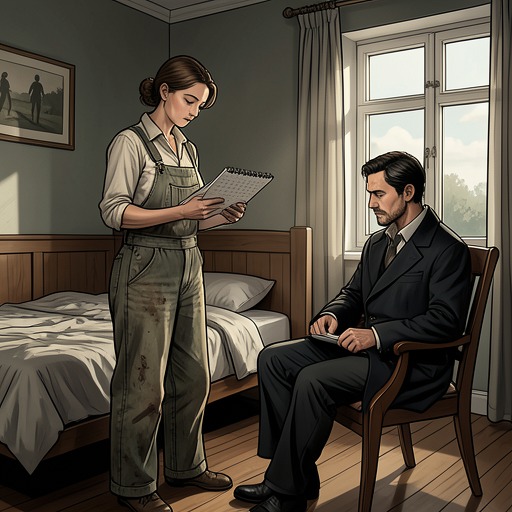
The Cottages are the remains of a farm that had gone out of business. The old farmhouse and surrounding barns, outhouses, and stables had been converted into living quarters, while some outlying buildings were close to collapse. The senior residents had already worked out a rota for the chores on a list supplied by Keffers, the gruff caretaker who arrived two or three times a week in a muddy van. The students followed the rota conscientiously, but the standard expected of them remained unclear: Keffers inspected the property with sighs and disapproving looks without explaining what more they could do.
The practical conditions were meagre. Repairs and flooding were among the few problems the students could report; in winter, Keffers supplied few gas canisters for the boxy heaters unless the weather was very cold. The seniors’ established routines therefore offered newcomers a way to settle into a place whose maintenance and expectations were not fully explained. Their local knowledge mattered, even though it could not make the farm comfortable or resolve the uncertainty surrounding their lives.
Receiving the Newcomers
Eight students who had left Hailsham that summer arrived at the Cottages expecting something like Hailsham for older students. On their first day, the seniors watched them stand awkwardly in a huddle outside the farmhouse. Before long, however, they came out and took the newcomers in hand. Kathy H. later remembers that they made a real effort to help the new arrivals settle, even though their initial amusement at the newcomers’ helplessness was part of the welcome.
That first encounter became a pattern across successive arrivals: Kathy H. recalls that the newcomers themselves would watch the next summer’s arrivals in much the same way. The seniors were thus not simply a fixed, authoritative group. Their role was passed on through experience, as yesterday’s bewildered students became the ones who knew how to receive the next group. The newcomers also relied on one another at first, moving around together and lingering outside the farmhouse because they did not know what else to do. The seniors’ help eased that transition, but did not erase the underlying fear Kathy H. associates with being new and exposed to an unfamiliar world.
Social Codes and Borrowed Models
The seniors also supplied a model for how couples were expected to behave. They treated Ruth and Tommy as an established couple, apparently unaware of the history behind their relationship. Ruth seemed pleased by this recognition and, in the first weeks, made a public display of affection: she put her arm around Tommy and kissed him while others were present. Kathy H. contrasts this with the more restrained conduct of the senior couples, who behaved in a manner that suggested a conventional mother-and-father pairing. Ruth soon adjusted her public behaviour to fit the example around her.
Kathy H. notices, however, that the seniors’ mannerisms often came from television rather than from any independent knowledge of adult life. Susie and Greg, regarded as among the oldest students and generally as being in charge, offered a particularly clear example. When Greg launched into a speech about Proust, Susie rolled her eyes and mouthed “Gawd help us.” Kathy H. recognised the gesture from an American television comedy, where a neighbouring character used it to prompt an audience’s laughter. She then noticed other borrowed gestures and habits: how the couples sat together, argued, and stormed out of rooms. Television was restricted at Hailsham, and although it was available at the Cottages, the students were not especially interested in watching it. Even so, its fragments furnished a ready-made script for behaving like a couple.
The farewell gesture Ruth adopted makes that process especially visible. At Hailsham, parting could mean an embrace or a kiss, even if the separation lasted only a few minutes. At the Cottages, couples tended to exchange few words and no kiss; a girl might lightly tap her partner’s arm near the elbow with the back of her knuckles as they moved apart. Ruth began using this gesture with Tommy. The custom had faded by winter, but for a time it offered a small, public sign of how quickly she was learning the seniors’ standards. Their influence was real, though the standards themselves were temporary and imitative.
Departure, Silence, and Remembrance
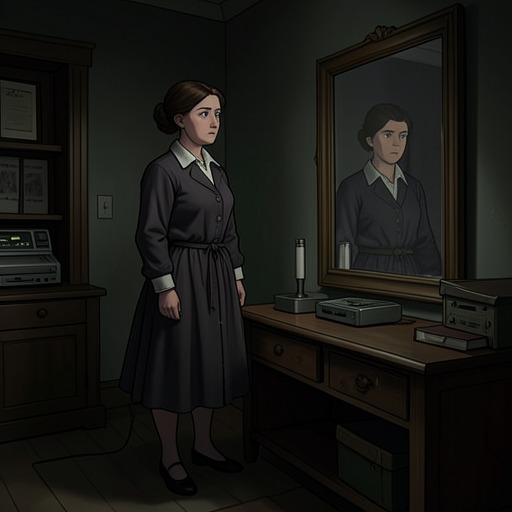
Kathy H. gradually notices a different kind of senior knowledge in the way the residents discuss people who have left. The seniors readily told funny stories about students they had encountered at the White Mansion or Poplar Farm, but rarely spoke of people who, until shortly before the newcomers arrived, must have been close friends. The contrast makes departure present without making it an ordinary subject of conversation.
A similar hush surrounded the seniors who went away on courses, which Kathy H. understood to be connected with becoming carers. They might be gone for four or five days, yet were hardly mentioned openly; when they returned, no one asked them questions in front of the others. Kathy H. allows that close friends may have discussed the courses privately, but remembers an evident understanding that such absences were not to be talked about in public. Watching two seniors leave through the misted kitchen windows, she wondered whether they would be gone altogether by the following spring or summer—and whether the remaining students would then avoid mentioning them too.
Those who had left persisted instead through practical references and objects. A repair might prompt discussion of how Mike used to fix a downpipe; a tree stump outside the Black Barn retained Dave’s name because he had sat there to read and write for years, including in cold or rainy weather. The students knew little about Steve beyond his liking for porn magazines. When such magazines turned up behind a sofa or among newspapers, the seniors handled them with apparent indifference, laughing briefly and flipping through them before setting them aside. Kathy H. and Ruth later recalled that the magazines circulated despite nobody admitting to liking them. The objects and anecdotes preserve traces of former residents, while the silence leaves their fuller lives largely unknown.
Significance
The senior residents help make the Cottages seem at first like a looser, more adult world than Hailsham: they organise chores, define social manners, and guide newcomers through unfamiliar routines. But Kathy H.’s account repeatedly qualifies that impression. Their authority is informal, their couple behaviour partly copied from television, and their community’s apparent ease exists alongside unspoken conventions about courses and former friends who have departed.
That combination connects the Cottages’ everyday social life to the students’ wider experience of being prepared for futures they do not fully understand. Kathy H. recalls that students could know they were different and have some vague awareness of donations without grasping what those facts meant; awkwardness around the subject itself discouraged further questions. The seniors’ silence about carer courses and departures echoes that broader pattern without amounting to a complete account of what they knew or thought. They pass on the usable customs of the Cottages, but the objects they leave behind and the people they stop naming disclose the limits of that knowledge. Their community offers companionship and practical guidance, yet it cannot make departure easy to speak about or make the students’ future an ordinary subject.